
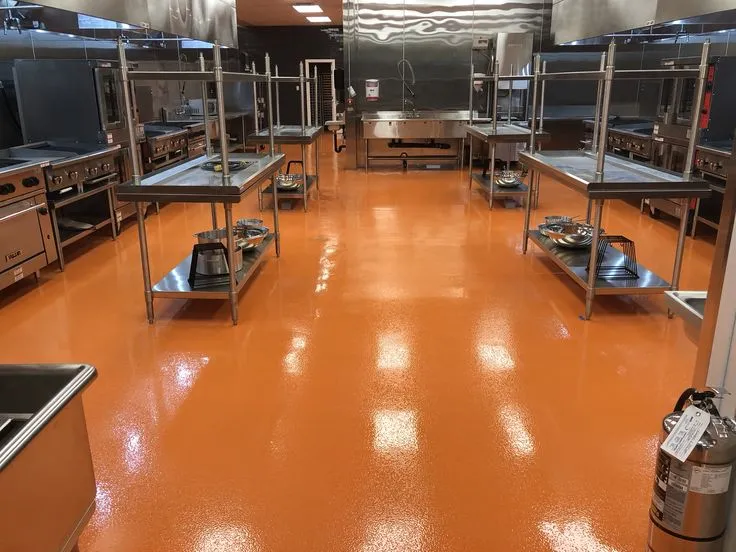
Replacing a worn commercial kitchen floor often sounds like a demolition project. Quarry tile, ceramic tile, or mosaic tile may appear outdated, stained, or difficult to maintain, leading operators to assume that everything must be removed before a resinous system can be installed. In some cases, however, a sound tile assembly can remain in place and become the substrate for a new seamless floor. The decision depends on bond strength, surface condition, preparation, drainage, and how the kitchen will be used after renovation.
Start With the Tile Bond
The most important question is not whether the tile looks old, but whether it is still firmly bonded to the concrete below. Loose, hollow, cracked, or moving tiles can create weak points beneath any new system.
Before planning Commercial Kitchen Epoxy Flooring Nj, the existing surface should be inspected carefully. Suspect areas may require individual repair or removal rather than assuming every tile can stay. A stable substrate is essential because a resinous overlay still depends on the integrity of the materials beneath it.
Glazed Tile Needs Mechanical Preparation
Ceramic and mosaic tiles are manufactured with hard, non-porous surfaces. That finish is useful in normal service, but it is not ideal for direct resin adhesion.
Professional preparation mechanically abrades the glaze to create a profile that allows primers and subsequent layers to bond. Diamond grinding is one method used for this purpose. The objective is to open the surface consistently enough for the specified system rather than simply roughening it at random. Dust and residue created during preparation must also be removed before priming begins.
Grout Lines Should Not Be Ignored
One reason older tiled kitchens become difficult to maintain is the network of grout joints between individual tiles. Grout can stain, crack, or become harder to clean as the floor ages. A resinous overlay can create a more continuous finished surface, but the underlying joints still need proper preparation. Damaged grout, missing material, and isolated loose tiles should be addressed before the new layers are installed.
The goal is to create a stable base rather than simply hide an old floor.
Cove Bases Improve the Perimeter
Commercial kitchen cleaning does not stop in the middle of the room. Water, grease, and sanitation products also reach the perimeter where the floor meets the wall. Integrated radius cove bases can create a smoother floor-to-wall transition and reduce sharp corners that are harder to clean. During a tile-overlay project, old vinyl coving or unsuitable perimeter materials may need removal so the new cove can be tied into the flooring system.
Texture Must Match Kitchen Conditions
Wet and greasy areas need practical traction, but extremely rough flooring can increase cleaning effort. The finished texture should therefore reflect how the kitchen operates. Operators evaluating Epoxy Flooring For Kitchen In Usa should consider dishwashing areas, cooking lines, cooler entrances, dry storage, and service corridors separately. Some locations may need more aggregate or texture than others.
A balanced finish should support employee footing while still allowing staff to remove grease, food residue, and cleaning products efficiently.
Overlaying Can Reduce Demolition Disruption
Removing an entire tile floor can generate debris, noise, disposal work, and additional time before the underlying slab is ready for a new system. When the tile is sound enough to remain, an overlay may reduce some of that disruption.
That does not mean preparation can be rushed. Bond testing, grinding, repairs, cleaning, priming, resin application, and curing still require careful scheduling. The advantage is avoiding unnecessary removal of a stable substrate, not skipping the technical steps needed for a reliable installation.
Drainage Still Needs Review
A new seamless surface will not automatically correct poor floor slope. If water already collects around drains or low spots, those conditions should be identified before the overlay is installed. Drain surrounds may also contain cracked tile, failed grout, or old repairs that deserve closer inspection. Correcting these problem areas before coating provides a better foundation for the finished system.
Managers should observe the floor after normal cleaning to see where water consistently remains.
Conclusion
Existing tile does not always need to be demolished before a commercial kitchen receives a new resinous floor. When the tile is firmly bonded and the substrate is otherwise suitable, mechanical preparation and proper repairs can allow it to serve as part of a new flooring system.
The key is to evaluate what lies beneath the visible finish. Tile bond, grout condition, drainage, perimeter details, texture, and operational demands all influence whether an overlay is appropriate. By making that decision through inspection rather than assumption, restaurant and food-service operators can choose a renovation approach that balances performance, sanitation, and disruption more effectively.