
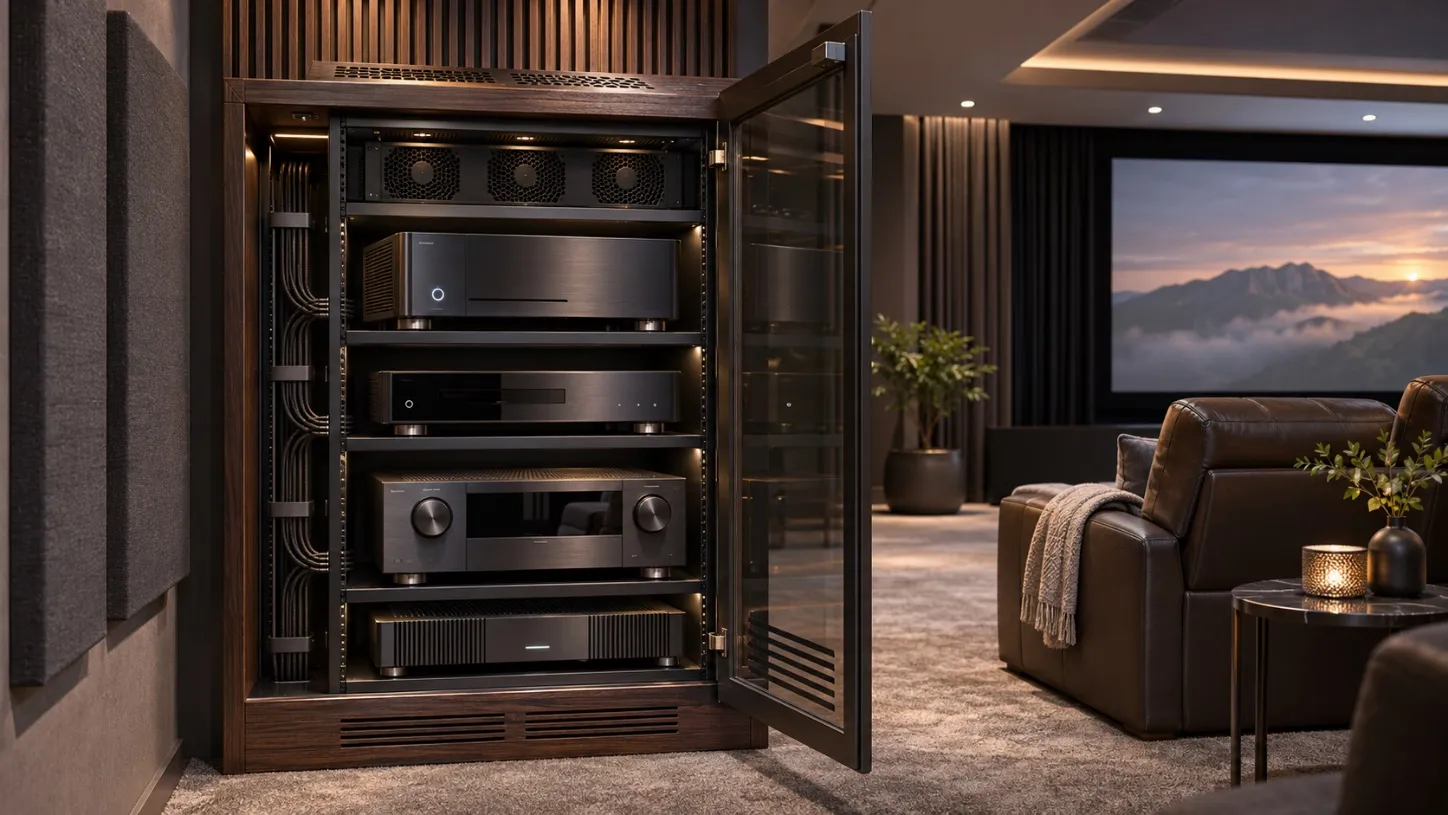
A home cinema can have excellent speakers and a beautiful display yet still struggle to deliver a truly immersive experience. The problem is sometimes unrelated to audio quality. Cooling fans, vibrating equipment cabinets, and poorly positioned electronics can introduce background noise that becomes noticeable during quiet movie scenes. These distractions are easy to overlook when selecting equipment. Understanding how electronic components generate sound helps homeowners create entertainment rooms where dialogue, music, and subtle sound effects remain the focus.
Why Equipment Noise Deserves Attention
Home theater electronics generate heat during operation. Some components use internal fans to manage temperatures, while others rely on passive cooling or external ventilation. In a quiet room, mechanical noise may become noticeable even when equipment operates normally. The effect is particularly distracting during dialogue-heavy scenes or moments of silence.
Noise levels also depend on cabinet design, room acoustics, and the distance between components and seating. Instead of evaluating every device independently, homeowners should consider the combined sound produced by the complete installation. This creates a more realistic picture of the listening environment.
Understand the Role of Movie Server Design
Movie servers differ in storage technology, cooling arrangements, and installation requirements. These characteristics can influence where equipment should be installed. A Kaleidescape Terra Prime SSD uses solid-state storage rather than traditional spinning hard drives. This eliminates mechanical drive noise, although the complete server’s operating sound depends on its particular design and cooling system.
Solid-state technology can offer performance benefits, but it does not automatically make every server silent. Homeowners should compare official acoustic specifications, ventilation requirements, and available installation space before deciding where to position equipment.
Choose Components With Installation Requirements in Mind
Selecting compatible products is essential when building a complete movie playback system.
The Kaleidescape Store collection at Epic Systems includes movie players, servers, and related hardware designed for different home cinema configurations.
When comparing equipment, buyers should look beyond storage capacity and playback specifications. Physical dimensions, power requirements, heat output, and ventilation clearances can affect installation decisions.
For example, a compact device may fit inside a media cabinet but still require adequate airflow.
Reviewing manufacturer documentation before purchasing equipment helps homeowners avoid locations that create overheating risks or make servicing unnecessarily difficult.
Position Equipment Away From Critical Listening Areas
A dedicated equipment room can reduce the amount of mechanical noise reaching the audience. However, not every property has space for a separate installation area. Where possible, noisy components can be positioned away from primary seating locations while maintaining suitable access for maintenance.
Equipment racks should stand securely on stable surfaces. Poorly supported cabinets may transmit vibrations into adjacent furniture or building materials. Cable routes must also be planned carefully to avoid placing connections under unnecessary strain. Homeowners should never block ventilation openings or enclose electronics beyond manufacturer recommendations simply to reduce audible noise.
Balance Effective Cooling With Acoustic Comfort
Cooling is essential for reliable equipment operation, but ventilation systems can introduce noise when poorly designed. Restricted airflow may cause temperature-controlled fans to operate more frequently or at higher speeds. This can increase the sound reaching the viewing area.
A practical approach should consider:
-
Manufacturer-recommended ventilation clearances.
-
Suitable spacing between heat-generating components.
-
Unobstructed cabinet air intake and exhaust paths.
-
Accessible equipment for cleaning and inspection.
-
Appropriate cooling arrangements for enclosed racks.
Homeowners should avoid improvised modifications to internal cooling systems. Changes that interfere with normal heat management can damage equipment and affect warranty coverage.
Consider the Room’s Acoustic Characteristics
Background equipment noise becomes more noticeable in some rooms than others. Hard surfaces may reflect mechanical sounds, while suitable furnishings and acoustic treatments can reduce unwanted reflections. However, acoustic panels are not substitutes for proper equipment placement or ventilation. A balanced room design considers both the entertainment soundtrack and environmental noise.
HVAC airflow, nearby household appliances, and outdoor traffic can also influence listening conditions. Addressing these sources during the design process helps homeowners understand whether equipment noise is genuinely the main issue or only one part of a broader acoustic problem.
Test Noise Levels Under Real Operating Conditions
Equipment that seems quiet during a brief demonstration may behave differently after extended use. Testing should include normal movie playback, downloading content, and operating other connected components when appropriate. Listen from the primary seating positions during quiet scenes and observe whether fans or cabinet vibrations become distracting.
Check that ventilation remains adequate after equipment has reached its normal operating temperature. If noise problems appear, investigate their cause before making changes. Relocating a component or improving approved airflow arrangements may be more effective than adding unnecessary soundproofing materials.
Conclusion
A comfortable home cinema should allow viewers to notice the details within a movie rather than the electronics supporting it. Quiet operation requires appropriate equipment selection, thoughtful placement, reliable cooling, and realistic testing. Epic Systems offers premium movie servers and related home theater equipment for homeowners evaluating these requirements. Instead of treating background noise as an unavoidable inconvenience, addressing it during initial planning can create a more natural listening environment and help preserve equipment reliability over time.